
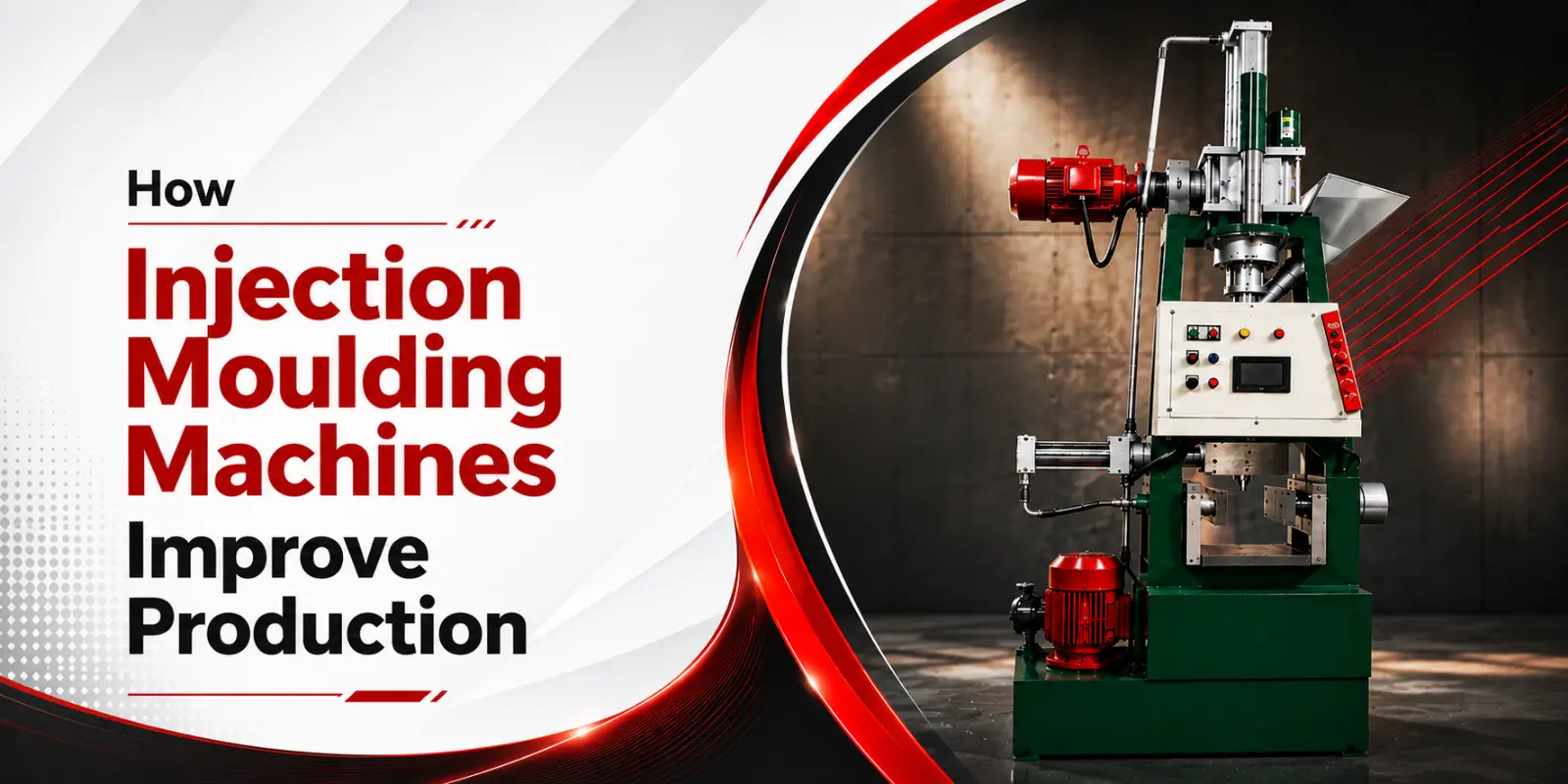
How Injection Moulding Machines Improve Production
In high-speed manufacturing environments, operational capability relies on achieving continuous output without sacrificing product integrity. Industrial moulding equipment forms the backbone of commercial component synthesis, enabling automated systems to convert raw polymers into ready-to-use parts at scale.
Deploying advanced moulding equipment transforms operational performance by reducing manual intervention, stabilizing cycle consistency, and eliminating recurring manufacturing defects. As market demands dictate faster turnaround times, understanding the operational mechanics behind output optimization becomes essential.
From structural component fabrication to complex multi-cavity output, here is how modern automated injection equipment enhances productivity and scales factory operations.
1. Minimizing Cycle Times Through Automated Fluid Dynamics
Production velocity depends heavily on how rapidly material liquefies, injects, and solidifies within the tool cavity. Traditional manual setups introduce variable lag during loading and extraction phases.
High-efficiency automated systems mitigate these delays through targeted mechanical control:
Rapid Plasticization Hydraulics: High-torque screw drives melt polymer stock rapidly, ensuring constant barrel pressure and zero hesitation between continuous shots.
Controlled Thermal Transfer: Integrated cooling channels extract heat uniformly across the mould face, allowing parts to set quickly for faster overall ejection cycles.
2. Dimensional Consistency and Lower Rejection Metrics
Part variance generates immediate material waste, rework costs, and downstream assembly line stoppages. Precision moulding machinery utilizes closed-loop feedback systems to monitor internal cavity pressure continuously.
Shot-to-Shot Uniformity: Digital monitoring maintains precise injection speed and holding pressure, eliminating sink marks, flash, and voids across thousands of iterations.
Predictive Temperature Profiling: Multi-zone heat controllers prevent thermal spikes, ensuring resin flows steadily without degradation or structural weakness.
3. Floor-Space Efficiency and Scalable Automation Integration
Modern production facilities must maximize output per square meter. Upgraded moulding hardware seamlessly pairs with secondary automation accessories like robotic arm pickers, sprue separators, and continuous conveyor networks.
Continuous Unattended Operation: Automated extraction allows units to run light-out shifts without requiring dedicated manual oversight.
Modular Auxiliary Tooling: Plug-and-play interfaces connect seamlessly with external hopper dryers, chillers, and color dosing units to streamline prep work.
4. Lower Energy Consumption Per Manufactured Unit
Power consumption makes up a major portion of ongoing operational overhead. Older constant-displacement hydraulic pumps draw energy continuously, generating excessive heat and inflating power utility expenses.
Variable Servo Motor Drives: Modern pump controllers regulate fluid flow dynamically, drawing power strictly during active clamping, injection, and holding phases.
Thermal Barrel Insulation Covers: Protective radiation shields retain heat inside the heating zones, reducing the baseline electrical load required to maintain melting temperatures.
5. Material Versatility and Regrind Utilization
Versatile machinery allows processing facilities to handle diverse resin grades, ranging from commodity polymers to high-grade engineering resins, while incorporating recycled material streams.
Controlled Virgin-to-Regrind Blends: Precision feed throat geometry prevents material segregation, allowing factories to safely incorporate recycled scrap directly back into production runs.
Wear-Resistant Bimetallic Barrels: Reinforced internal linings handle glass-filled and abrasive compounds without wearing down prematurely.
Key Productivity Metrics Enhanced by Modern Moulding Units
Operational Metric | Manufacturing Impact & Benefit |
Cycle Speed | Accelerated clamping and injection velocity cut overall part turnaround time. |
Scrap Rate | Consistent pressure holds reduce air pockets, incomplete fills, and part distortion. |
Energy Ratio | On-demand servo drive technology significantly reduces kWh usage per part produced. |
Uptime Efficiency | Robust mechanical frames lower maintenance frequency and prevent unpredicted shut-downs. |
Final Thoughts: Building High-Throughput Production Capacity
Upgrading to modern injection moulding machinery delivers immediate, measurable gains across every tier of manufacturing: faster cycle completion, minimal defect generation, efficient energy usage, and simplified labor requirements. For facilities aiming to expand output and secure competitive unit economics, integrating advanced moulding technology is a fundamental strategy for sustainable growth.